



A Safer Place

Short term, safe housing is available to women and their children who are fleeing an abusive relationship.
Each year, more than 160 women and children receive emergency shelter services from WYCC Grey Bruce where qualified staff are on-site 24 hours per day to ensure that women are supported during their stay.


Our Facility
Our staff is available to provide understanding support, counselling, family & criminal court support, information and referrals to other community resources.
Our eight bedrooms have recently been updated and feature multiple beds so that families can stay together. Women share the kitchen, recreational areas, large fenced yard, and laundry facilities.
Residents share cooking and household chores. The home is fully furnished and can meet a range of special needs.
Food, personal care items and other basics are provided for women and children during their stay.
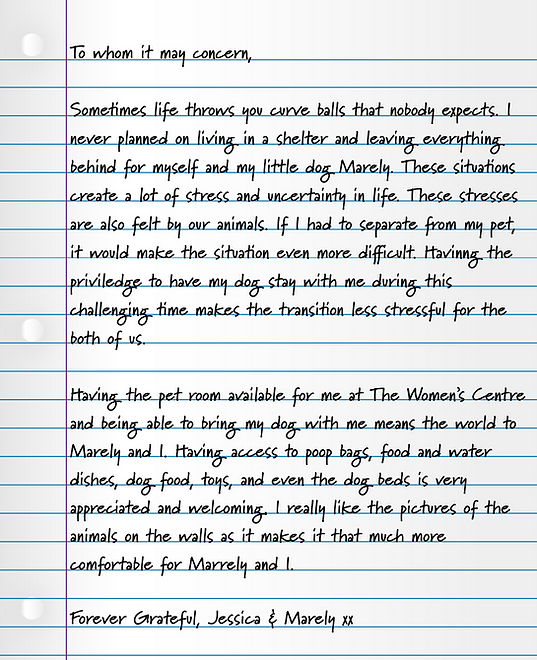
We are one of the few pet friendly shelters in Ontario
Our rooms can accommodate dogs, cats or other domestic animals.


Proudly Supported by
Client Testimonial


Coming to the Shelter
Before You Arrive
If you are fleeing violence or feel unsafe, you can come to the shelter at any time. Calling ahead is helpful because it allows us to prepare for your arrival and make your intake as smooth as possible. If you cannot call first, please know that we will still welcome you and work with you to ensure you have a safe place to stay.
Coming to the Shelter:
Before You Arrive
If you are fleeing violence, abuse, or an unsafe situation, you can come to the shelter at any time, day or night. Calling ahead is helpful because it allows us to prepare for your arrival and make the intake process as smooth as possible, but it is not required. If you cannot call first, we will still welcome you and work with you to ensure you and your family have a safe place to stay.
What to Expect When You Contact Us
You do not need to have all the answers before calling. Our staff will guide you through the process, answer your questions, and help you understand your options.
-
We will talk with you about your immediate safety needs and any needs your children may have so we can prepare to welcome you.
-
We will explain how the shelter works, answer your questions, and let you know what you can expect during your stay.
-
Together, we will explore options, resources, and supports that can help during and after your stay.
-
We will work with you to develop a plan that supports your safety, well-being, and future goals.
What Happens When You Arrive:
When you arrive, our staff will welcome you, help you settle in, and talk with you about how we can best support you and your children:
-
We will explain the shelter's services, daily routines, and confidentiality practices so you understand how we protect your privacy and help keep you safe.
-
You will be shown to your room and given time to settle in. As you feel ready, you may choose to connect with other families staying at the shelter or spend time with one of our supportive counsellors.
-
We will provide information about the dynamics and impacts of abuse and help you understand that the abuse is not your fault.
-
You will have opportunities to connect with other women who have had similar experiences and learn that you are not alone.
-
Together, we will develop a plan that supports your safety, well-being, and future goals.
-
We will connect you with resources, services, and community supports that can help you move forward and build a life free from violence and abuse.

In-Shelter Counselling
In-Shelter Counselling
Violence Against Women Crisis Workers provide supportive guidance to women staying in the shelter.
Frontline staff support clients by helping to decrease their sense of isolation, providing education about their rights, building safety plans, and by providing referrals to complementary agencies. Staff help women overcome feelings of loneliness and despair by teaching about the cycle of abuse and by encouraging healthy coping strategies.

Safety
Planning
A Safety Plan focuses on the things you can do in advance to be better prepared in case you have to leave an abusive situation. If you are in immediate danger call 911 and leave immediately.
Contact WYCC Grey Bruce, Crisis Line @ 519-371-1600 or Toll Free @ 1-800-265-3722. Let the staff know that you intend to leave an abusive situation and ask for support in safety planning.
Where to Start


Request a police escort
or ask a friend,
neighbour or family member to accompany you when you leave.

When speaking with
the police, you can request a police officer that specializes
in abuse cases.

DO NOT tell your partner you are leaving.
Leave quickly.

Consult a lawyer. The Women & Youth Crisis Centre Grey Bruce can provide a list of legal resources.
Things you can do to prepare


Keep any evidence
of physical abuse,
such as photos.

Keep a journal of all violent incidents, noting dates, events, threats and any witnesses.

Remember to clear your phone of the last number you called to avoid the abuser utilizing redial.

Have a back-up plan if your partner finds out where you're going.

If you are injured, go to a doctor, emergency room or a clinic and report what happened to you. Ask medical officials to document your visit.

Change address with Canada Post – ensure notice does NOT to come to your present address.

Open a bank account in your own name and arrange that no bank statements or calls be made to you. Or, arrange that mail be sent to a friend or family member.

Plan your emergency exits. Think about safe areas of the house where there are no weapons and where there are at least two ways to escape.

Plan and rehearse
the steps you will take if you have to leave quickly.
Learn them well.

Never lock yourself in the bathroom. Keep yourself between your partner and your emergency escape if you feel you may need to get out safely.

If the situation is very dangerous, use your own instinct and judgement to keep yourself safe. Call the police as soon as it is safe to do so.

The Women & Youth Crisis Centre Grey Bruce is pet friendly. Alternatively, arrange for someone to care for your pets temporarily,
until youget settled.

Decide where you will go if you have to leave home, even if you don’t think it will come to that.

Store digital versions or photocopies of the following documents in a safe place, away from the originals. Hide the originals, if you can. Carry what you can, without suspicion, in your purse.

Passports, birth certificates, Social Insurance Cards, and immigration papers, for all family members

Lease/rent agreement, house deed, mortgage payment records, and house insurance

Divorce papers, custody documentation, court orders, restraining orders, marriage certificate

1-3 years of your partner’s T4s

Work Permits

Medications, prescriptions, and medical records, for all family members

Pictures of your spouse/partner

Set aside, in a place you can get to quickly, $10 to $20 for cab fare

Banking items like credit cards, bank cards, cheque book, and bank statements

Try to keep all the cards you normally use in your wallet

Driver’s licence, vehicle registration, and insurance

Health cards, school records, and vaccination records

Keep the following items handy, but only grab them if it's safe to do so:

Emergency suitcase with immediate needs.

Jewelry

Small Saleable
objetcs.

Items of special sentimental value

A list of other items you would like to take if you get a chance to return to your home
When you leave, take your children if you can. The police cannot help you remove them at a later date, unless you have a valid court order signed and directed by a judge.
In some circumstances, it may be possible for police to escort you to your home at a later date, to remove additional personal belongings. At that time, take the items listed above as well as anything else that is important to you or your children.

